6 Ways for International Students to Study in the U.S. Without Breaking the Bank


How Can International Students Find and Secure Scholarships in the U.S.?
Scholarships, which are grants awarded based on merit or financial need, can significantly reduce the out-of-pocket costs for international students. By understanding the different types of scholarships, targeting government and university funding, and mastering the application process, you can position yourself to receive awards that make studying in the U.S. manageable, or even free. This section will guide you through the various scholarship categories, key programs, effective application tactics, and eligibility requirements.
Step 1 of 3
Use of this form constitutes your agreement to our Terms of Use and Conditions.
Step 2 of 3
Step 3 of 3
Thank You!
Your information has been submitted successfully.
For more information, please review our Terms and Conditions.
What Are the Different Types of Scholarships Available for International Students?
Scholarships come in various forms, from those recognizing academic excellence and financial need to specialized awards for specific fields of study or demographic groups.
- Merit-Based Scholarships are awarded for outstanding academic achievements, such as high GPAs or test scores, and can cover full or partial tuition.
- Need-Based Grants are provided to students who demonstrate significant financial hardship, often requiring detailed family income information.
- Athletic Scholarships are available for talented athletes participating in NCAA programs, covering tuition and sometimes room and board.
- Field-Specific Fellowships are designed for students pursuing studies in STEM, business, arts, and other disciplines, often tied to research or creative projects.
- Country-Specific Funds are established through international agreements or philanthropic organizations focused on supporting students from particular regions.
Understanding these distinctions will help you pinpoint the scholarship opportunities that best match your profile and academic aspirations, setting you up for successful applications.
Which Government-Funded and University-Specific Scholarships Should You Consider?
Before you begin applying, it's beneficial to compare some of the leading scholarship programs to identify the best fit for your background and academic objectives.
| Scholarship Program | Provider | Award Value |
|---|---|---|
| Fulbright Foreign Student Program | U.S. Department of State | Full tuition, living stipend, health insurance |
| Hubert H. Humphrey Fellowship | U.S. Department of State | Living stipend, professional development opportunities |
| University-Specific International Excellence | Select public universities | Up to 50% tuition waiver |
| Private Foundation Grants (e.g., Rotary, Soros) | Nonprofit organizations | $5,000–$25,000 per academic year |
| Field-Based Fellowships (e.g., AAUW, Schlumberger) | Industry or discipline societies | $10,000–$40,000 one-time award |
By evaluating these various funding sources—federal, university, and private—you can determine which combinations best align with your academic level and chosen field of study.
How to Effectively Apply for Scholarships: Strategies and Deadlines

Crafting successful scholarship applications involves thorough research, compelling essays, and timely submissions.
- Begin your scholarship research early by utilizing university databases and specialized grant search engines.
- Tailor each essay to the specific priorities of the funding organization, emphasizing your academic achievements and leadership potential.
- Request recommendation letters from professors who can speak to your capabilities and character.
- Keep track of all deadlines using a shared calendar, allowing at least four weeks for drafting and revisions.
- Submit your complete applications well in advance of each deadline to prevent last-minute errors.
Adopting these practices will significantly boost your chances of success and ensure you meet all the requirements for competitive awards.
Scholarship Application Strategies
To maximize your chances of securing scholarships, it's crucial to conduct thorough research, write compelling essays, and adhere strictly to deadlines. Students should start their search early, customize their essays to align with the funder's objectives, obtain strong letters of recommendation, meticulously manage deadlines, and submit complete applications on time.
The College Board, "BigFuture"
This resource offers valuable guidance on the scholarship application process, reinforcing the advice provided in this article regarding effective application strategies. Source: The College Board, "BigFuture"
What Are the Eligibility Criteria for Merit-Based and Need-Based Scholarships?
Merit-based and need-based scholarships typically have distinct academic requirements and necessitate different types of financial documentation.
| Scholarship Type | Academic Requirement | Financial Documentation |
|---|---|---|
| Merit-Based | Minimum GPA of 3.5 or equivalent | A statement confirming eligibility, but no financial details are required. |
| Need-Based | Satisfactory academic record | Proof of family income, bank statements, and tax forms. |
| Combined Awards | High academic achievement and demonstrated financial need | Both GPA verification and income proofs are necessary. |
Understanding these differing requirements will help you prepare the correct materials for each scholarship category, preventing any potential disqualification.
Which Affordable U.S. Universities and Colleges Are Best for International Students?
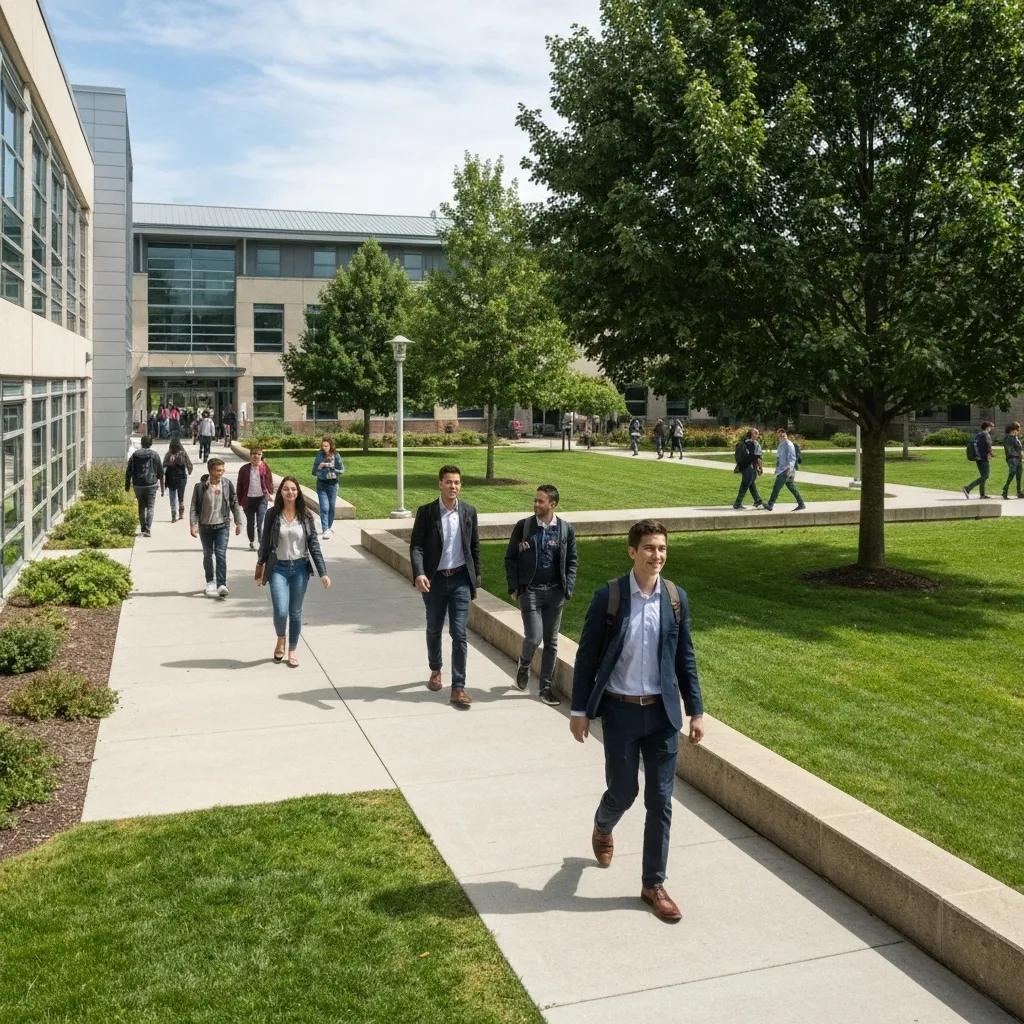
Finding an affordable U.S. education often starts with selecting institutions that offer lower tuition rates without compromising academic quality. Public universities, community colleges, and certain private colleges can provide world-class degrees at more accessible price points. This section will explore cost-effective institution types, compare tuition models, and highlight some of the top budget-friendly schools for international students.
How Do Public Universities Compare to Private Universities in Tuition Costs?
Public universities, which receive significant funding from state governments, generally charge lower tuition fees for both in-state and out-of-state students compared to private institutions.
| Institution Type | Estimated Annual Tuition (Out-of-State) | Typical Scholarship Availability |
|---|---|---|
| Public University | $20,000–$35,000 | High (state-funded and merit-based awards) |
| Private University | $35,000–$55,000 | Moderate (institutional grants and scholarships) |
Cost Comparison of Universities
Generally, public universities offer more affordable tuition rates for out-of-state students than private universities. Public institutions typically have annual tuition costs ranging from $20,000 to $35,000, while private universities can range from $35,000 to $55,000. Public universities also tend to provide a greater number of scholarship opportunities.
U.S. News & World Report, "Best Colleges"
This reputable source provides valuable data on tuition costs and scholarship availability, supporting the article's comparison between public and private universities. Source: U.S. News & World Report, "Best Colleges"
The funding structures of public universities help to lower their sticker prices, making state universities an excellent choice for international students seeking both affordability and strong academic programs.
Why Are Community Colleges a Cost-Effective Option for International Students?
Community colleges offer two-year associate degrees and seamless transfer pathways to four-year universities at significantly lower tuition rates. This allows students to complete their foundational general education requirements before moving on to a bachelor's degree program.
- Lower tuition fees, often ranging from $4,000 to $8,000 per year, compared to universities.
- Smaller class sizes and more personalized attention in introductory courses.
- Established transfer agreements with state university systems, ensuring a smooth transition.
- Flexible class schedules that accommodate part-time work opportunities.
- Convenient locations, often near urban centers with more affordable living costs.
Students can leverage this model to graduate with minimal debt and then transfer to bachelor's programs in locations close to major career hubs.
What Are Some Examples of Cheapest Universities for International Students?
Several institutions are recognized for their low tuition rates combined with high academic standards.
- University of the People – Offers tuition-free online programs with minimal assessment fees.
- South Texas College – Out-of-state tuition is under $7,000 annually.
- California State University system – Average annual tuition for nonresidents is around $20,000–$25,000.
- Minot State University (ND) – Tuition is under $8,000 per year for all students.
- Brigham Young University – Approximately $12,000 tuition for international students.
These examples demonstrate how a balance of location, program delivery format, and state funding can lead to exceptional affordability.
How to Use Tuition Comparison Tools to Choose the Right Institution?
Online tuition comparison platforms simplify the decision-making process by aggregating cost information, application deadlines, and scholarship opportunities.
- Filter institutions based on your desired program, tuition range, and available scholarships.
- Compare the net cost of attendance after estimated financial aid using side-by-side tables.
- Read student reviews and research graduation outcomes for each institution.
- Utilize virtual tours and cost calculators to estimate living expenses accurately.
Comparative tools streamline your research efforts, ensuring you focus your application efforts on institutions that align with both your academic goals and your budget.
How Can International Students Minimize Living Costs While Studying in the U.S.?
Reducing living expenses is a critical component of an affordable U.S. education. By effectively managing budgets for housing, food, transportation, and healthcare, you can save thousands of dollars annually. Understanding average costs, choosing the right accommodation, and implementing practical saving strategies will help you optimize your daily spending without compromising your quality of life.
What Are the Average Housing, Food, and Transportation Costs for Students?
Living expenses can vary significantly depending on the city, but typical annual budgets generally fall within these ranges.
| City Category | Housing (Rent + Utilities) | Food (Groceries + Dining) | Transportation (Pass/Car) |
|---|---|---|---|
| High-Cost (e.g., New York City) | $12,000–$18,000 | $4,000–$6,000 | $1,500–$2,500 |
| Mid-Cost (e.g., Austin, Texas) | $8,000–$12,000 | $3,000–$4,500 | $1,000–$1,500 |
| Low-Cost (e.g., Minneapolis, Minnesota) | $6,000–$9,000 | $2,500–$3,500 | $800–$1,200 |
How to Choose Affordable Accommodation: On-Campus vs. Off-Campus Options?
Selecting the right housing option involves balancing cost, convenience, and opportunities for community engagement.
- On-Campus Dormitories typically include utilities and meal plans, fostering a strong sense of community, but may come with mandatory fees.
- Off-Campus Apartments require a lease commitment but offer more freedom to cook your own meals, share costs with roommates, and potentially find lower monthly rent.
- Homestay Programs provide an immersive cultural experience, often include meals, and offer predictable monthly rates.
- Shared Rentals allow you to reduce per-person rent by living with multiple roommates.
- Co-living Spaces combine furnished private rooms with shared amenities, including utilities and coworking spaces.
What Budgeting Tips Help Reduce Food and Transportation Expenses?
Careful expense tracking and smart choices can significantly cut your daily costs without sacrificing nutrition or mobility.
- Prepare meals in bulk at home and freeze portions for easy access later.
- Purchase student or monthly transit passes for unlimited travel on public transportation.
- Shop for seasonal produce at farmers' markets and discount grocery stores.
- Take advantage of ride-share promotions and utilize campus shuttle services.
- Participate in campus meal plan sharing programs to split costs with fellow students.
How Does Health Insurance Impact Living Expenses for International Students?
Health insurance is a mandatory requirement for most U.S. institutions and represents a fixed annual expense. However, it serves as crucial protection against potentially high medical bills. Understanding your options—whether university-sponsored group policies or private insurance carriers—will help you choose coverage levels and copays that best suit your health needs and budget.
What Financial Aid and Work Opportunities Are Available for International Students in the U.S.?
Financial aid extends beyond scholarships, and combining grants with paid employment can significantly offset education costs. Familiarizing yourself with on-campus employment regulations, private loan options, and internship opportunities can enhance your funding portfolio and provide valuable professional experience.
How Do On-Campus Employment and Assistantships Help Fund Education?
On-campus jobs and graduate assistantships offer flexible work schedules and can provide tuition benefits.
- Roles such as library or lab assistants typically pay $10–$15 per hour, with eligibility to work up to 20 hours per week.
- Teaching and research assistantships often include tuition waivers and annual stipends ranging from $12,000 to $30,000.
- International student centers and writing labs frequently hire peer advisors.
- Resident advisor positions can offer complimentary room and partial board.
- Work-study positions funded by the federal government may be available through partner institutions, though international student eligibility can be limited.
What Are the Regulations for International Students Working in the U.S.?
Students holding an F-1 visa are permitted to engage in limited on-campus employment and authorized off-campus roles under specific conditions.
- On-campus work is restricted to 20 hours per week during academic terms and can increase to 40 hours during official breaks.
- Curricular Practical Training (CPT) allows for work that is integral to your curriculum, provided you obtain prior authorization.
- Optional Practical Training (OPT) permits up to 12 months of work in your field after completing your degree (this can extend to 36 months for STEM fields).
- Engaging in unauthorized employment can jeopardize your visa status and future immigration applications.
- Always consult with your Designated School Official (DSO) before accepting any employment offer.
Are Private Student Loans an Option for International Students?
Private loans from U.S. lenders can help bridge funding gaps when scholarships and family resources are insufficient.
- Loan amounts typically range from $5,000 to covering the full cost of attendance.
- Interest rates vary, and many lenders require a U.S. cosigner.
- Repayment schedules can begin either after graduation or during your studies, depending on the lender's terms.
- Some lenders offer options without a cosigner, but these usually come with higher interest rates.
- Eligibility for these loans is based on creditworthiness and the specific degree program.
How Can Internships and Co-op Programs Support Financial Needs?
Paid internships and cooperative education programs integrate academic learning with practical professional experience.
- Co-op programs involve alternating semesters of full-time work with study periods, often providing hourly wages of $15–$25.
- Internship stipends can help cover living expenses and enhance your resume for post-graduation job searches.
- Partner companies may offer tuition reimbursement or signing bonuses to interns.
- Summer research grants in STEM fields can provide funding ranging from $3,000 to $5,000.
- Leveraging campus career services can connect you with exclusive industry networking opportunities.
How Should International Students Strategically Plan Their Affordable U.S. Education Journey?
Proactive financial planning and timely applications are essential for securing cost savings and maximizing funding opportunities. Establishing a structured timeline that incorporates scholarship deadlines, visa requirements, and cost comparisons will empower you to focus your efforts effectively.
Why Is Early Application and Financial Planning Crucial for Affordability?
Institutions and funding bodies often prioritize students who apply early, offering them preferential aid and potentially lower tuition guarantees.
- Applying before priority deadlines (typically November–January) grants access to the largest scholarship pools.
- Submitting FAFSA or institutional financial aid forms early helps determine eligibility for grants and waivers (note: FAFSA is generally not available to international students, but many universities have their own financial aid application processes).
- Securing housing with refundable deposits can lock in lower rates.
- Plan international transfers or dual-degree programs at least six months in advance.
- Develop a five-year budget that accounts for projected tuition increases and inflation in living costs.
What Visa Financial Requirements Must Be Met for Studying in the U.S.?
The F-1 visa application process requires proof that you have sufficient funds to cover your first year of study and living expenses.
- Submit bank statements demonstrating liquid assets that are equal to or exceed the combined costs of tuition and living expenses.
- Provide an affidavit of support from sponsors or official scholarship award letters.
- Present documentation of ongoing financial support beyond the first year to maintain your visa status.
- Include confirmation of health insurance to meet both university and immigration requirements.
- Ensure all non-English documents are officially translated and notarized as needed.
How to Compare Total Costs: Tuition, Fees, and Living Expenses?
A comprehensive comparison of all costs will reveal the true financial commitment for each institution and location.
| Cost Component | Estimate Method | Significance |
|---|---|---|
| Tuition & Fees | University-published rates plus mandatory fees | Represents the largest portion of direct educational spending. |
| Accommodation | Average rent data and utility costs for the area | Varies significantly based on city and housing type. |
| Food & Transportation | Local market surveys and public transit pass rates | Influences daily budget allocation and lifestyle choices. |
| Health Insurance | Premiums for university-provided or private plans | Essential for avoiding unexpected and high medical expenses. |
| Miscellaneous | Personal spending estimates for entertainment, supplies, etc. | Impacts the required amount for emergency savings. |
Comparing these categories side-by-side will help you identify which universities offer the best overall value for your investment.
What Is the Return on Investment (ROI) of Affordable U.S. Education?
Calculating the ROI involves balancing the total cost of education against potential salary increases and career advancement opportunities.
Earning an affordable degree from a reputable U.S. institution often leads to higher starting salaries, access to valuable professional networks, and opportunities for practical experience that can outweigh the initial investment within five to seven years post-graduation.
How Can Academic Excellence and Extracurricular Activities Maximize Aid and Admission Chances?
Demonstrating strong academic performance and leadership skills signals your value to both scholarship committees and admissions officers, often resulting in better offers and increased financial aid. By excelling academically and engaging in meaningful extracurricular activities, you can significantly enhance your profile and qualify for merit-based awards that further reduce your educational costs.
Why Is Academic Performance Important for Scholarships and Financial Aid?
A strong academic record indicates dedication and potential, making students eligible for the most prestigious awards.
Colleges frequently award merit scholarships to students who maintain GPAs above a certain threshold—often 3.7 or higher—and achieve high scores on standardized tests. Scholarship amounts are typically directly correlated with these academic metrics.
How Do Extracurriculars and Leadership Roles Influence Scholarship Opportunities?
Active involvement in clubs, volunteer work, and sports highlights well-rounded candidates who possess valuable skills:
- Holding leadership positions in organizations demonstrates responsibility and initiative.
- Leading community service projects aligns with the mission-driven criteria of many scholarships.
- Participating in research groups showcases intellectual curiosity and a commitment to inquiry.
- Captaining sports teams reflects teamwork, discipline, and perseverance.
- Organizing cultural events or clubs underscores cross-cultural engagement and communication skills.
These activities provide compelling examples for your essays and interviews, significantly boosting your chances of receiving awards.
What Are Best Practices for Crafting Strong Scholarship and Admission Essays?
Compelling essays effectively blend personal narratives with clear evidence of your goals and suitability for the program:
- Begin with a vivid anecdote or a significant challenge that has shaped your aspirations.
- Highlight specific achievements and the valuable lessons you've learned from them.
- Clearly articulate how your vision aligns with the institution’s values and program strengths.
- Use concrete examples to illustrate your leadership, research experience, or community impact.
- Thoroughly proofread your work and seek feedback from mentors or university writing centers.
Well-crafted essays can differentiate you in competitive applicant pools and justify requests for larger financial awards.
How Can Guidance from Counselors Improve Your Financial Aid Success?
Professional advisors offer targeted support throughout the application process:
- They can help identify lesser-known scholarships and grant opportunities.
- Counselors can review your applications for completeness and ensure they align with funder priorities.
- They provide valuable essay critiques to refine your tone, structure, and overall impact.
- Advisors can prepare you for scholarship interviews and portfolio submissions.
- They can connect you with alumni networks for mentorship and potential referrals.
Working with counselors can accelerate your progress and uncover opportunities you might otherwise miss.
What Are Common Questions About Affordable Education for International Students in the U.S.?
International students frequently seek straightforward, practical answers to their most pressing affordability concerns. This section provides concise, easily digestible responses to the most common queries, equipping you with quick insights to guide your further research and decision-making.
What Are the Cheapest Universities in the U.S. for International Students?
Leading affordable institutions include the University of the People (tuition-free online), South Texas College (around $7,000 annual tuition), Minot State University ($8,000), and select campuses within the California State University system ($20,000–$25,000). These schools offer a balance of low tuition, accessible transfer pathways, and scholarship opportunities.
How Can International Students Reduce University Costs Effectively?
Students can effectively reduce costs by combining merit scholarships, transferring credits from community colleges, securing part-time on-campus employment, and applying for private grants. Developing a realistic budget, choosing cities with lower living expenses, and preparing meals at home are also key strategies for lowering overall costs.
What Is the Average Cost of Living for International Students in Different U.S. Cities?
In lower-cost regions like the Midwest, annual living expenses typically range from $10,000 to $14,000. Mid-cost cities in the South and Southwest average between $14,000 and $18,000, while high-cost metropolitan areas such as New York City or San Francisco can exceed $20,000 annually. Your choice of location significantly impacts your overall budget.
Are There Scholarships Specifically for International Students in the U.S.?
Absolutely. Prominent programs like the Fulbright Foreign Student Program, the Hubert H. Humphrey Fellowship, and numerous university-specific international scholarships are exclusively designed for non-U.S. citizens. These awards often cover full tuition, provide living stipends, and include health insurance, based on academic merit or field of study.
With these targeted strategies and actionable advice, international students can successfully turn the dream of an affordable U.S. education into a reality. Careful planning, effective utilization of funding avenues, and a strong focus on academic and extracurricular achievements pave the way for a cost-effective, high-quality college experience that yields significant returns throughout your professional career.

Study in the USA ®
Get matched to the best program for you
Let us know what you're looking for so we can find the best school for you.

Useful Articles


Check Out These Schools

English Language Institute at Michigan Technological University
$5,000—$10,000 Semester

Arkansas Tech University
$10,000 — $15,000 Semester
Sam Houston State University - Office of International Programs
$5,000—$10,000 Semester

The Fashion Institute of Technology (FIT)
Typical cost per Session: $1,000—$2,000

Santa Barbara City College
Typical cost per Year: $5,000—$10,000

Elgin Community College
Typical cost per Year: $5,000—$10,000




Start your U.S. adventure with Study in the USA

Learn About U.S. education financing, housing, and more
The Michigan English Test for Higher Education Admissions in the U.S.
College can be hard. Proving your English doesn’t have to be. The Michigan English Test (MET) assesses your English skills, not your test-taking skills. When it’s time to prove your English, MET is the only test you need.

TutorABC
Ready to take your language learning to the next level? Have you heard about TutorABC, the World's No. 1 Online Platform for Learning English and Chinese? TutorABC is recognized as the top language platform, harnessing innovative technology to offe...
TestDEN Ultimate TOEFL Test Prep Online Course
TestDEN's Online TOEFL Test Prep is just what you need to quickly and effectively prepare for the TOEFL test. Since 1998, TestDEN has helped tens of thousands of students raise their TOEFL scores.
Resources
Learn about American culture and education direct from our experts at Study in the USA. Read more