Begin Your Bachelor’s Degree at a Community College: 2 + 2 Agreements

2 years at a community college + 2 years at a university = 4 years (bachelor’s degree)
Many American students—and 90,000 international students—attend a community college for the first two years of university studies in the USA. With nearly 1,200 community colleges in the country, there are many benefits of this model in comparison to studying all four years at a university. Community colleges offer significantly lower tuition, smaller classes and strong student support. And oftentimes, they serve as pathways to prestigious four-year universities.
Step 1 of 3
Use of this form constitutes your agreement to our Terms of Use and Conditions.
Step 2 of 3
Step 3 of 3
Thank You!
Your information has been submitted successfully.
For more information, please review our Terms and Conditions.
One of the great strengths of American higher education is the ease with which students can transfer from one college or university to another. For students who plan to earn a bachelor’s degree the transition from community college to a university for the final two years can be quite easy. Students will attend a community college to complete lower-division general education requirements and then transfer to a university. There, they can take upper-division courses and thereby complete a bachelor’s degree. Such an approach is commonly known as “2 + 2,” though it may take more than four years to complete all of the courses required for a bachelor’s degree.
In fact, many university advisors recommend that students attend community college “college transfer” programs first, and then transfer to universities for the final two years. For example, students studying at Santa Monica College, a community college, have transferred to UCLA upon receiving their two-year transfer degree.
2 years at a community college + 2 years at a university = 4 years (bachelor’s degree)
What’s the Difference?
Community colleges are different than four-year universities. Here’s how:
- Admission is easier. TOEFL (Test of English as a Foreign Language) scores and academic requirements are usually lower for admission to U.S. community colleges than to four-year institutions. Many community colleges also offer ESL (English as a Second Language) programs or developmental math for students whose scores are too low to begin academic studies immediately.
- Costs are lower. Tuition at community colleges can be as much as 20 percent to 80 percent less than at four-year American universities and colleges. This is a tremendous cost savings for the first two years of the bachelor’s degree.
- Student enrollment in classes, or at the institution in general, is often smaller than at four-year schools. Teachers and advisors are able to provide more one-on-one attention to students. Many U.S. and international students say that attending smaller schools for the first two years helped them make a good transition into larger four-year schools for the final two years.
- Classroom environments are more supportive. In the U.S. educational system, students often compete for good grades. International students who do not speak English fluently are at a disadvantage. Often, they do better and feel more comfortable in smaller classes where there is less competition. In addition, community colleges typically offer free tutoring to support students’ success.
- Adjusting is easier. Two years at a community college can help an international student improve English language skills and grow accustomed to the U.S. educational system and culture.
Student Experience
Dusan Djokic from Serbia is studying at Edmonds Community College in Washington State and plans to transfer his community college credentials to a university so he can study Business Administration.
"I chose Edmonds Community College because I could get my high school diploma and also, at the same time, start earning my Associate of Arts degree. It was great opportunity for me to finish two programs in two school years. I am now one year ahead of my friends in Serbia. I am planning to work for one year on OPT (Optional Practical Training); then I will transfer to a university. My top two universities are California State University in Northridge or City University of New York."
Edmonds Community College International Student Services
"Coming to America and Edmonds Community College was the best choice I could have possibly made. I realized that it is very important to stick to your goals and do not give up. There are so many opportunities on campus such as activities, clubs and jobs. Doing well in class and participating on campus will help you to be successful toward your dreams."
Five Tips For a Successful Transfer!
- START WHERE YOU WANT TO FINISH—First, find out exactly what the requirements are for admission to the school and to the academic program you want to transfer to. Then, choose classes now at your current school based on what you know you’ll need in the future.
- BE ORGANIZED AND READY TO WORK HARD—Exploring colleges and universities to transfer to in the future is exciting and fun, yet it does take effort. In addition to general admission standards, like the number of credits you have taken and your overall GPA, there might also be additional requirements for admission into your major, such as specific classes, a portfolio, a personal essay or even an interview.
- TAKE FULL ADVANTAGE OF YOUR RESOURCES—Work closely with advisors at both your current school and, if possible, at your future school. Clearly communicate to everyone what your transfer goals are so that you and your advisors are all working in concert with each other.
- ATTEND NEW STUDENT ORIENTATION—Don’t assume that because you have already attended college you don’t need to attend an orientation program for new students. Nothing could be further from the truth. Even though you are bringing college credit with you when you arrive, you are a new student, and you need to learn how to navigate the systems and resources at your new school.
- HAVE A DREAM SCHOOL, AND A PLAN “B”—If your dream has always been to attend a nationally ranked and highly selective university, then develop a transfer plan for this school and pursue it with enthusiasm. At the same time, keep yourself grounded and keep your options open. There are thousands of truly excellent colleges and universities for you to consider. Just because you haven’t heard of a school doesn’t mean that in the end it might actually be the very best school for you and become your dream school!
Elizabeth Lyon, Associate Director and Transfer Advisor at Edmonds Community College. Edmonds Community College located 20 minutes north of Seattle is a state college offering two-year university transfer degrees, English as a Second Language (ESL), professional degrees and certificates; as well as High School to University. The campus combines excellent coursework, award-winning faculty, and superior services to help students with all their needs while living in the United States.
Making Transfers Easy
Many colleges and universities have special arrangements known as “articulation agreements” or Transfer Admission Guarantee (TAG) partnerships with other institutions. Articulation agreements help ensure that the classes taken at a community college transfer easily to partner institutions with little or no loss of credit and time. For example, the 10 Maricopa Community Colleges in the metropolitan area of Phoenix, Arizona, work very closely with the University of Arizona, Arizona State University and Northern Arizona University to make sure that Maricopa’s courses will transfer.
University Transfer Admission Guarantee partnerships guarantee a community college student’s admission upon completing specific requirements set by the university. These requirements may include a specific grade point average, coursework, and TOEFL score. Some majors are excluded from TAG agreements. For example, Business Administration is excluded from TAG agreements to the University of California, Irvine.
Most commonly articulation and TAG agreements will be between community colleges and four-year colleges and universities within the same state, but not always. For example, all the 115 California community colleges have articulation agreements with the California State University (CSU) system and the University of California (UC) system. For example, if a student successfully completes the general education requirements for California State University or the University of California at Santa Monica College, he or she can transfer to one of the universities and complete the last two years for the bachelor’s degree.
These partnerships provide students an opportunity to save money on community college tuition and still transfer and graduate from a top-ranked university.
Whether students choose to study the arts or sciences depends on what they plan for their “major” field of study. During the first two years, students are studying a wide variety of humanities, social sciences, and natural science courses along with some foundation courses to prepare for their major.
Don’t allow some of the challenges of transferring to deter you. If you plan ahead, a transfer can be an excellent way to accomplish your educational goals and enrich your experience with American higher education. Just as shifting gears in a car is a way to get more speed and power, transferring from one college or university to another can propel you to greater accomplishments.

More Great Options for You
What advice would you give a student considering a 2+2 option?
I would say the biggest challenge is overcoming the language barrier. In order to be successful in the United States, the language is a very important part. I’d encourage each of the students to study in an English language program if someone doesn’t feel comfortable with expressing thoughts and ideas in English. If the students move on to college course without developing their English skills, they will likely to have a difficult time understanding the class lecture.
Scott Han is the Director of International Marketing at Cascadia College in Bothell, Washington, north of Seattle. At Cascadia College, 74 percent of students enroll with the intention of transferring to a 4-year university program.
"I am currently preparing to transfer to Brigham Young University (BYU). During my time in Cascadia, I was able to discover my interest and major, thus, I decided to study Actuarial Science, and possibly double major with Business Management."
Cascadia College
- Cascadia College student, Amanda Budiana from Jakarta, Indonesia
International Transfer Fairs
Many community colleges host “transfer fairs” so their students can learn about opportunities to earn a terminal degree at a four-year university. At these fairs, usually held in a school auditorium on campus, students have a great opportunity to talk to admissions representatives from prestigious universities around the country.
For example, an international community college student studying in Seattle may transfer out of Washington State to places like California or New York. Representatives from other U.S. universities come to international transfer fairs to recruit outstanding international students into years three and four at their universities.
Sometimes several other community colleges in a region join as well so the fairs can draw even more universities to a multi-day event.
Specialty Programs
One of the unique and special features of community colleges in the USA is the hands-on, personal attention students receive. Smaller class sizes and an overall smaller student population allows for such attention. Along with tutoring programs, accessibility to professors, and the like, many community colleges also offer specialty programs. The majority of these specialty programs are designed to give students an edge when preparing to apply and transfer to four-year colleges and universities to complete their bachelor’s degrees.
Study in the USA
Get matched to the best program for you
Let us know what you're looking for so we can find the best school for you.

Useful Articles


Check Out These Schools
Edmonds College
$1,000—$5,000 Quarter
Central Washington University
$2500—$5000 Quarter

The Fashion Institute of Technology (FIT)
Typical cost per Session: $1,000—$2,000

Santa Barbara City College
Typical cost per Year: $5,000—$10,000
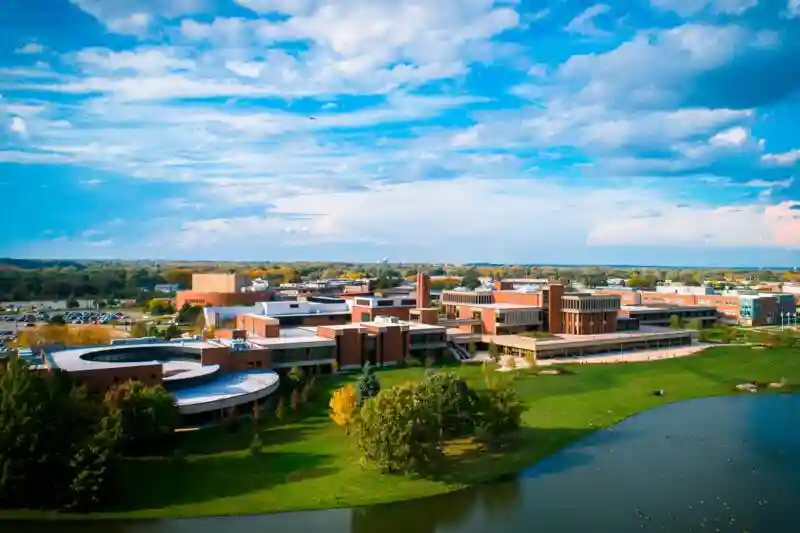
Elgin Community College
Typical cost per Year: $5,000—$10,000




Start your U.S. adventure with Study in the USA

Learn About U.S. education financing, housing, and more
The Michigan English Test for Higher Education Admissions in the U.S.
College can be hard. Proving your English doesn’t have to be. The Michigan English Test (MET) assesses your English skills, not your test-taking skills. When it’s time to prove your English, MET is the only test you need.

TutorABC
Ready to take your language learning to the next level? Have you heard about TutorABC, the World's No. 1 Online Platform for Learning English and Chinese? TutorABC is recognized as the top language platform, harnessing innovative technology to offe...
TestDEN Ultimate TOEFL Test Prep Online Course
TestDEN's Online TOEFL Test Prep is just what you need to quickly and effectively prepare for the TOEFL test. Since 1998, TestDEN has helped tens of thousands of students raise their TOEFL scores.
Resources
Learn about American culture and education direct from our experts at Study in the USA. Read more