Choosing a U.S. Summer Program

Business, communication, politics and economics are all becoming increasingly international, requiring a global perspective to better understand other cultures and countries. Studying at a U.S. university or college is one way you can broaden your cultural understanding.
Step 1 of 3
Use of this form constitutes your agreement to our Terms of Use and Conditions.
Step 2 of 3
Step 3 of 3
Thank You!
Your information has been submitted successfully.
For more information, please review our Terms and Conditions.
Each year, hundreds of thousands of students from around the world come to study at U.S. universities and colleges. Some students spend four years working toward a bachelor’s degree, while others remain longer in order to attend graduate or professional school.
Another option, which requires less time away from home and is considerably less expensive, is to study in America during the summer.
Most U.S. summer programs take place between May and August, and last anywhere from two to twelve weeks. In this short period of time, you will have abundant opportunities to improve your English, learn about U.S. culture, politics and customs and visit different parts of the country.
Who Studies During the Summer
If you do choose a summer program, you will have plenty of company. Traditionally, most U.S. university students do not attend classes full-time during the summer. Instead, they usually spend these months traveling, vacationing, or working in order to save money for the following year’s tuition.
However, this has been changing. Many universities now offer a wide variety of courses during the summer. In many instances, students may take as many classes as they would during any other term.
You will be sharing the campus with many U.S. students and international visitors. There are many reasons for spending all or part of your summer on a U.S. campus:
• More preparation prior to undertaking full-time studies in the USA
• Travel and personal growth • Meeting university students from the USA and other countries
• Improving conversational and academic English skills • Fun and challenging experiences
• Academic credit that is transferable to a program back home • Specialized training or professional development program
Where to Study
Your study experience in the USA can extend beyond textbooks and the people you meet. Summers are an excellent time to travel and explore other areas of the country. Although the United States is a large country, you can easily plan trips to cities and sites beyond the campus where you take classes. Consequently, you may want to attend a program or university that is located in a region of the country that especially appeals to you.
Where can you imagine yourself? Where have you always wanted to go?
• West: West Coast cities, such as Los Angeles, Santa Barbara, San Diego and San Francisco offer dozens of fine summer study programs. Magnificent mountain and river views abound from campuses in Washington and Oregon. There are spectacular desert locations in Arizona and New Mexico. The mountainous settings of Colorado, Montana, and Utah offer more opportunities for learning.
• Midwest: What about beautiful lake regions in Wisconsin and Minnesota, and large urban settings in Michigan? The bustling Midwest city of Chicago offers a number of fine study options. And there are sprawling campuses in places like Indiana and Ohio.
• Southeast: Along the southeastern coast, you can choose from schools in Florida, Virginia and Maryland, or in the great capital city of Washington, D.C.
• Northeast: The northeastern section includes settings in the hills and towns of New England, and urban universities in Boston, Philadelphia and New York.
What to Study
Most often, the same amount of academic credit is awarded for a class no matter when it is offered. The only significant difference is the schedule. Because summer term is shorter than fall, winter and spring terms, summer classes are condensed. You will learn the same material; the lecture may just be longer. Depending on your perspective, this can be a very efficient form of study. Students often select classes that will complement their current academic program of study, while others choose classes out of curiosity or for fun.
In addition to the regular course offerings for the arts, sciences, and humanities, you will find a wide variety of classes during the summer: special intensive classes taught by visiting scholars; workshops that combine study and field trips; scientific research opportunities; and courses offered especially for non-degree candidates.
English Language Programs
If you are not a native speaker of English, there is no better way to improve your language skills than to spend a few months at a U.S. university. Before selecting a program, ask yourself if your English is adequate enough for you to understand university lectures given entirely in English. Is it good enough for you to participate in class discussions? … to prepare class assignments? … to take regular written examinations?
Depending on your language abilities, you may want to enroll in an intensive English language program that combines English study with academic courses. Or, you may simply need to supplement your academic studies with an English as a Second Language (ESL) course.
Many schools do not require a TOEFL score as part of the enrollment process. In such cases, you may want to check with the summer program office to find out what criteria they use for accepting non-native English speakers.
Contacting Programs
Many schools do not require a formal admissions process for their summer programs, as opposed to their regular academic-year programs. If you are applying only for the summer and do not intend to study for a degree, the admissions process is typically simpler.
To begin the process of applying to a program, write directly to the Summer Sessions office of each school that interests you. If you use email, please indicate that you learned about the program from Summer Study in the USA® magazine.
Ask for a catalog of summer session courses, an application and housing information. Most such information is available by February or March. In addition, this type of information is typically available on the institution’s website.
As part of your application process, be sure to determine whether you will need a visa to study in the United States during the summer. (If you qualify based on their regulations, U.S. universities provide the Certificate of Eligibility—formerly known as an I-20—for you take to the U.S. embassy for visa processing.)
If you do require a visa, be sure to allow enough time for the embassy to process it and return it to you before your departure date. (Because of recent regulations put in place by the Department of Homeland Security, in recent years, visa processing is taking longer than ever before.) Some embassies require appointments and charge a fee for such processing. More information about visas and embassy requirements in particular countries can be found at https://travel.state.gov/content/travel/en/us-visas/study.html
You can also find information about U.S. summer and full-time academic programs at your local educational advising center. There, trained advisors can help you select a summer program. In addition, many education and study abroad professionals have offices in major cities in Europe and Asia.
No matter what courses you choose or which university you attend, visiting the USA through a summer study program is a rewarding experience that you will never forget.

More Great Options for You
You will learn best in the place where you feel the most comfortable. Be sure to examine your personal preferences and, while you do, consider the following criteria:
Size: How large is the university or program? Does a major university campus with thousands of students appeal to you? Or, do you prefer a small program with only a few hundred classmates?
Location: Do you want to study in a large urban city, a small town, or a mid-size city?
Recreation:Your summer university campus might offer a full range of recreational activities, including use of the school gymnasium and sports complex, swimming pools, tennis courts and golf courses. You might also want to consider the popular outdoor recreational activities of the surrounding region. In addition, find out if cultural activities like concerts, museums, outdoor and indoor theatres, and summer festivals are easily accessible. These events can be as educational as your academic program.
Cost and Housing: Costs vary widely from school to school. Be sure to ask for the exact costs of those programs that interest you. Also inquire whether the costs quoted include room and board. Most school brochures and websites will list tuition and housing costs separately.
Student Population: Summer sessions on some campuses are dominated by special interest groups such as computer science, teacher training or sports camps. Your program may share the campus with a specialized summer institute for adults or high school (secondary) students. In some communities, the majority of students are commuters (people who must travel from home or work in order to get to school). Some universities, however, are mainly residential, meaning that the majority of students live and study together on campus. If living either on- or off-campus is important to you, do some research before you apply.
Student Tips
“I wanted to gather both experience and knowledge in a very efficient manner. My goal was to get fresh information from the best teachers that I could afford, and every day I go to class reinforces my belief that I am on the right track.”
“I wanted to have a strong foundation in English to be able to communicate with people from around the world. English is also fundamental for my future career.”
Study in the USA ®
Get matched to the best program for you
Let us know what you're looking for so we can find the best school for you.

Useful Articles


Check Out These Schools
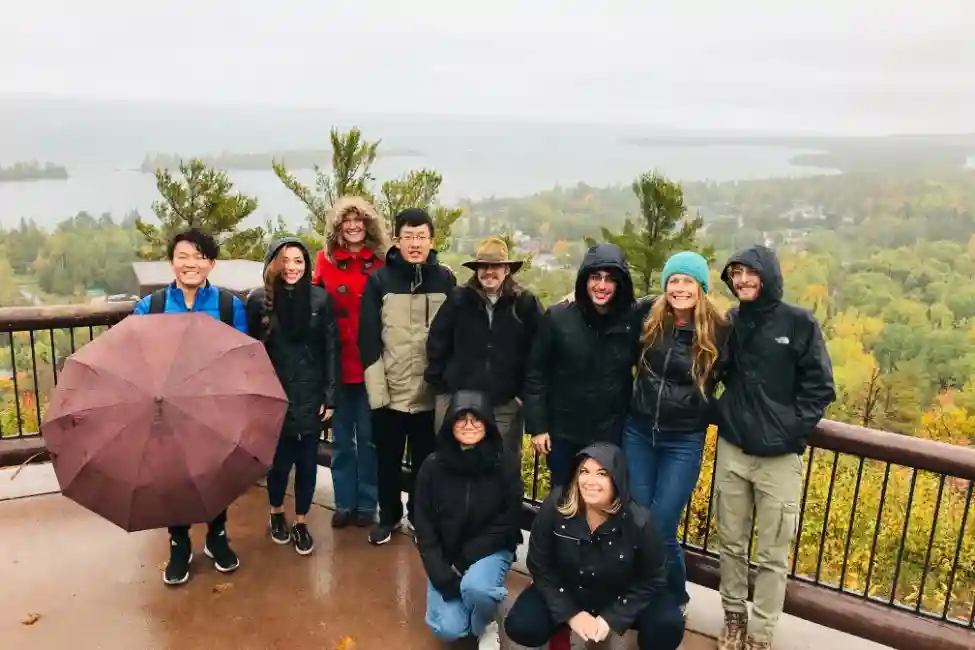
English Language Institute at Michigan Technological University
$5,000—$10,000 Semester

Arkansas Tech University
$10,000 — $15,000 Semester
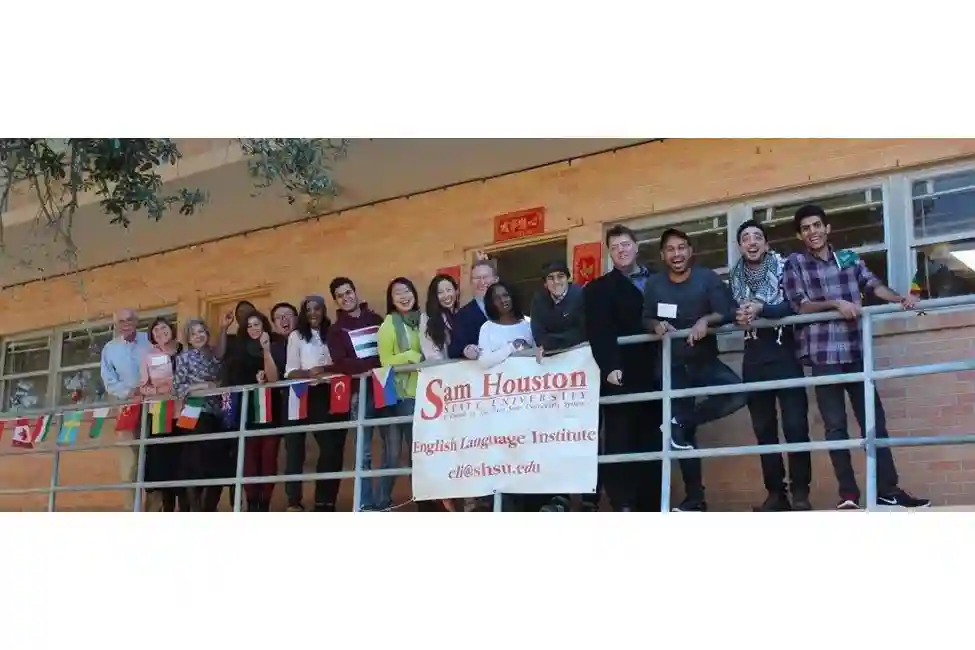
Sam Houston State University - Office of International Programs
$5,000—$10,000 Semester

The Fashion Institute of Technology (FIT)
Typical cost per Session: $1,000—$2,000

Santa Barbara City College
Typical cost per Year: $5,000—$10,000
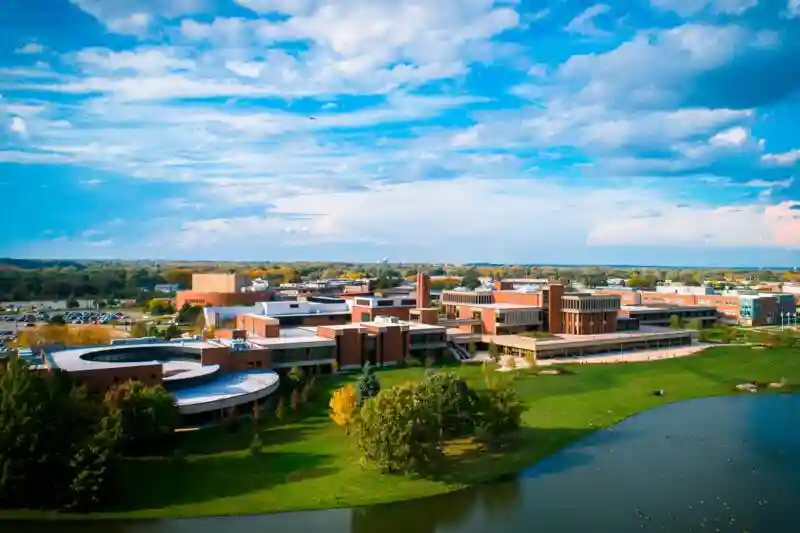
Elgin Community College
Typical cost per Year: $5,000—$10,000




Start your U.S. adventure with Study in the USA

Learn About U.S. education financing, housing, and more
The Michigan English Test for Higher Education Admissions in the U.S.
College can be hard. Proving your English doesn’t have to be. The Michigan English Test (MET) assesses your English skills, not your test-taking skills. When it’s time to prove your English, MET is the only test you need.

TutorABC
Ready to take your language learning to the next level? Have you heard about TutorABC, the World's No. 1 Online Platform for Learning English and Chinese? TutorABC is recognized as the top language platform, harnessing innovative technology to offe...

TestDEN Ultimate TOEFL Test Prep Online Course
TestDEN's Online TOEFL Test Prep is just what you need to quickly and effectively prepare for the TOEFL test. Since 1998, TestDEN has helped tens of thousands of students raise their TOEFL scores.
Resources
Learn about American culture and education direct from our experts at Study in the USA. Read more