The International Student's Roadmap to Thriving at a U.S. University
Navigating the American Classroom, New Ways of Learning, and New Place to Live
The United States has many great colleges and universities, which is the reason more than 1 million international students made the decision to study in America last year. But beyond this, perhaps students don’t know what to expect in terms of the daily routine of studying in a U.S. institution. We’ll help explain the basics!
Step 1 of 3
Use of this form constitutes your agreement to our Terms of Use and Conditions.
Step 2 of 3
Step 3 of 3
Thank You!
Your information has been submitted successfully.
For more information, please review our Terms and Conditions.
Graded assignments throughout the term
Unlike in many other countries, most faculty do not assess students’ knowledge only by giving just one or two huge exams. While many do give a midterm and also a final exam, most faculty expect students to turn in many small assignments and papers regularly. Why? Because research into the effectiveness of different teaching formats shows that repeated practice of applying knowledge and practicing new skills leads to deeper understanding and better retention of new knowledge.
Use the syllabus to help plan
Many American professors will hand out a detailed syllabus at the beginning of the semester, providing information about the required reading, assignments, due dates, and learning goals for the whole semester. The syllabus allows you to plan time for large assignments and strategize the competing demands of multiple classes — students typically take four or five courses at one time in a bachelor’s program, and three in a master’s or doctoral program.
A grading rubric sets expectations
Another thing that many professors provide is a grading rubric, which is a chart that explains what the professor is looking for when grading an assignment. Sometimes the rubric is handed out with the assignment’s instructions; sometimes it accompanies the returned paper with the grade on it. The rubric explains what areas of your work are very good and where you need to improve.
You & your professors: office hours, a more informal style, and feedback
If you have a question about an assignment or a grade you received or simply have a question about something that was discussed in class, take advantage of your professor’s office hours. Most universities require faculty to hold two to three hours a week free simply to talk to students. Often professors sit in their offices during that time, and no student ever stops by with questions. But those hours are meant to be used to help you — developing a relationship with your professor can help you understand the course material better, might lead to information about internships and jobs, and eventually even to letters of recommendation. Don’t be shy about building a relationship with your professors!
In general, interactions with U.S. professors are much less formal than in many other countries. Some faculty will invite you to call them by their first names. A common expression is that “a good teacher isn't a sage on a stage, but a guide by your side.” This is related to the American philosophy of student-centered learning. While certainly, extremely brilliant lecturers can open up new worlds to their students, great teaching also consists of getting to know students and helping them learn the things that are most relevant to their life goals.
Also, at the end of each semester you will be asked to anonymously evaluate each of your professors. It’s your responsibility to do so thoughtfully and to carefully give specific criticism or suggestions. This feedback makes them better teachers and is also used by their department chair to do their annual evaluations.
Take advantage of the writing center and library staff
Many majors require students to write in-depth research papers. Most campuses will have staff in the library writing center who can help you with research and provide strategies for how to write a long paper. You will want to ask them and your professor about how to avoid plagiarism because many faculty now use software that will detect if any sentence in your paper was copied from a book, the internet, or even another student’s paper. You don’t need to be the next Einstein or Shakespeare — that’s OK! — you just need to be honest and transparent about where your ideas originate.
Learning by discussion and in groups
Another characteristic of many U.S. classrooms is discussions of the reading or critical questions and problems. Many professors couple this with group work and graded group assignments. While this type of learning is foreign to many international students, it teaches you how to work well in groups, which is an important job skill you’ll need after graduation.
Research and on-campus work
And speaking of job skills, look for opportunities to do research with faculty — even as a bachelor’s student — and for internship opportunities so you can gain work experience before you graduate. This combination of academic learning and practical experience is highly valued by future employers. U.S. law also allows you to work on campus up to 20 hours per week during the academic semester, which is another great source of experience and can help offset some of your expenses.
Getting career assistance & other services
Related to that, make sure to check out the career services office. There, you can find help writing a great resume, getting general career advice, and practicing for job interviews. Most career services offices hold annual job fairs, during which companies and agencies come to campus to recruit new workers.
There are also typically many other services offices on a campus such as a tutoring center, a center for students with disabilities, emotional counseling services, perhaps a STEM center, an honors program, and support for different types of students (for instance, a women’s center, centers for different ethnic groups, LGBTQA support, etc.). And because of the Americans with Disabilities Act (ADA), most campuses are accessible to wheelchairs, provide accommodations with note taking and testing, and other types of support for students with disabilities.
Increasingly, campuses are also embracing universal design in both new construction and remodeling, such as non-touch faucets and door openers. This type of design can also influence how materials are provided to students — like reading and syllabi easily accessible on mobile devices and the distribution of assignments. What all of this means is that you don’t need to go it alone — U.S. faculty and staff are there for you, so ask for help when you need it!
Two final people should be mentioned — the Dean of Students and your Designated School Official (DSO) in the International Office. The Dean of Students is available to help with a problem or during a crisis, such as a conflict with an office or a faculty member. And your DSO can give you the correct information and advice on all things pertaining to maintaining your visa status.
Life outside the classroom
Before closing, it is important to mention that what happens outside of the classroom is also a very important and quintessential part of the U.S. college experience. This is the stuff you see in the movies: life in the dorm, spending time with your new friends, joining clubs, and perhaps even serving as a club officer to develop your leadership skills. Attend lectures and on-campus events. Go on university-sponsored trips or travel with your friends. Form study groups and make lasting friendships. Have a wonderful time learning and enjoying your new life!
Dr. Cris Toffolo is the Director, Office of International Programs, and a professor of Justice Studies at Northeastern Illinois University

Dr. Cris Toffolo
Get matched to the best program for you
Let us know what you're looking for so we can find the best school for you.

Useful Articles



来看看这些学校


The Fashion Institute of Technology (FIT)
Typical cost per Session: $1,000—$2,000

Santa Barbara City College
Typical cost per Year: $5,000—$10,000
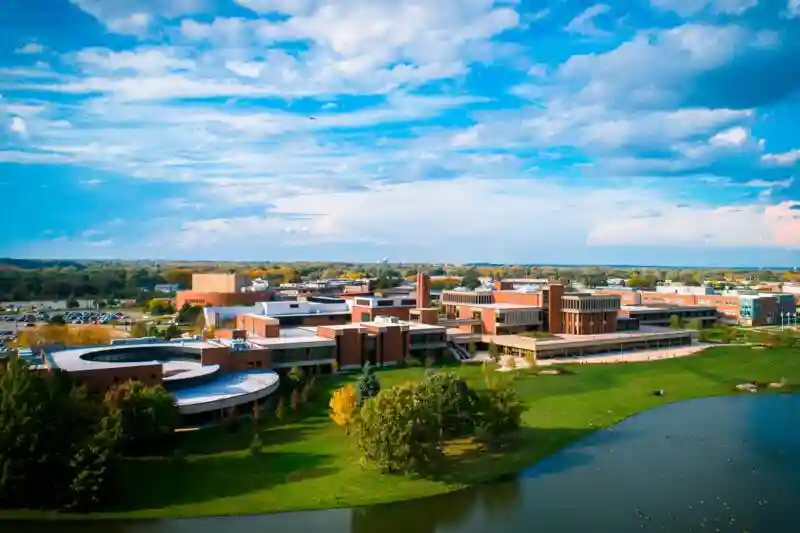
Elgin Community College
Typical cost per Year: $5,000—$10,000




Start your U.S. adventure with Study in the USA

Learn About U.S. education financing, housing, and more
The Michigan English Test for Higher Education Admissions in the U.S.
College can be hard. Proving your English doesn’t have to be. The Michigan English Test (MET) assesses your English skills, not your test-taking skills. When it’s time to prove your English, MET is the only test you need.

TutorABC
Ready to take your language learning to the next level? Have you heard about TutorABC, the World's No. 1 Online Platform for Learning English and Chinese? TutorABC is recognized as the top language platform, harnessing innovative technology to offe...
TestDEN Ultimate TOEFL Test Prep Online Course
TestDEN's Online TOEFL Test Prep is just what you need to quickly and effectively prepare for the TOEFL test. Since 1998, TestDEN has helped tens of thousands of students raise their TOEFL scores.
Resources
Learn about American culture and education direct from our experts at Study in the USA. Read more